
Gamjatang
감자탕
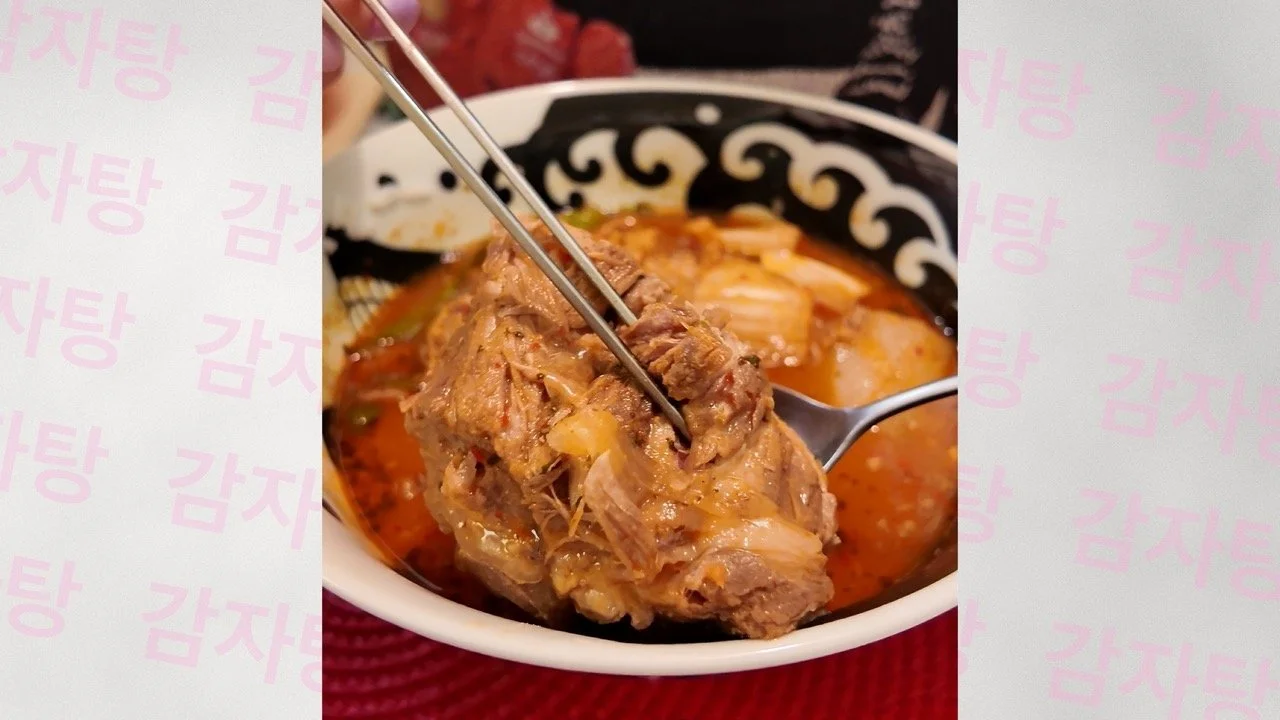
Made with affordable pork neck bones and hearty potatoes, this Korean stew is great for the colder seasons.
I’m cooking it in two parts. First, pressure cook the bones with aromatics to form the stew base. Then, we boil the stew base and add in the potatoes.

Main Ingredients
1kg (2.2lbs) pork neck bones
(you can add more)Water (to the maximum fill line of your pot)
1 white onion (peeled and quartered)
A knob of peeled ginger (sliced )
1 bunch of green onions (the white part for the stew base, the green part for garnish)
4- 6 garlic cloves
Stew Base Seasoning1 - 2 heaping tbsp dwenjang (or brown miso)
1 tbsp soy sauce
1 tbsp fish sauce
2-3 bay leaves
Ground black pepper
STEP ONE:
Make a tasty stew base
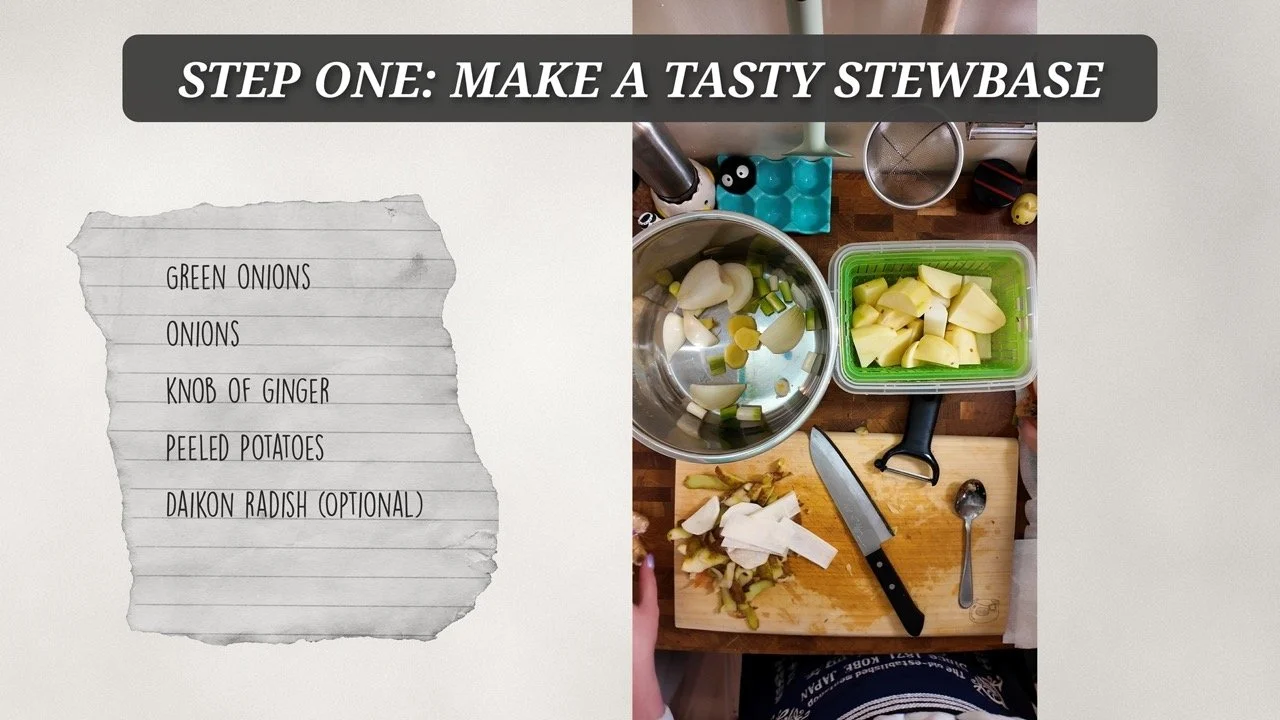
To the instant pot: add a bit of oil and switch to “Sauté Mode, Medium”. Unceremoniously add the green onion ends, white onion, ginger, and garlic, and sauté on medium until you can smell them.
STEP TWO:
Blanch the bones
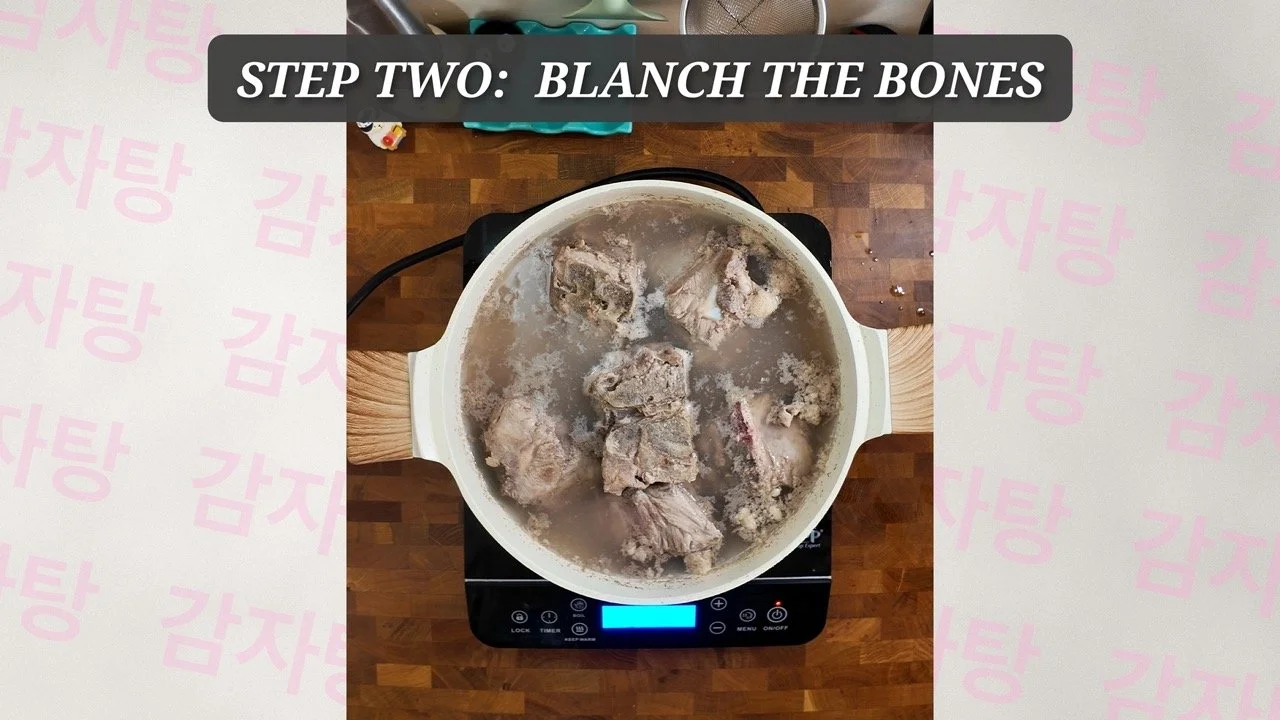
Prep your bones by boiling them for 5 minutes to remove foam, bone shards, and gamey smell. Dump the water and rinse the bones in cold water.
STEP THREE:
Flavour & Pressure cook
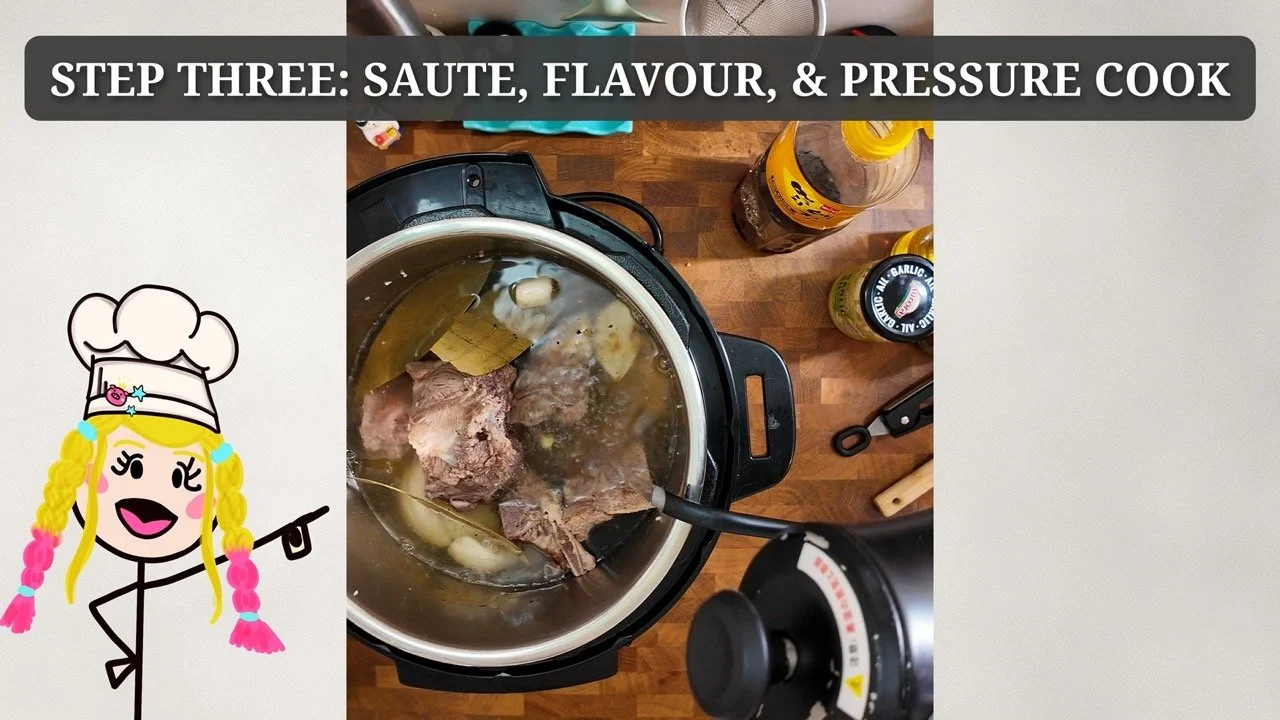
Add the blanched bones and mix them around with the aromatic veg.

Cover with water to your max fill line, then add the Stew Base seasoning: dwenjang paste, soy sauce, fish sauce, bay leaves and black pepper. Mix it around so the dwenjang isn’t a clump at the bottom.
Add the lid, lock it up, and change the mode from “Saute” to “Pressure Cook”. Use “High Pressure” for 22 minutes. While it is cooking, we can prep the next step for the stew!
STEP FOUR:
HERB TIME
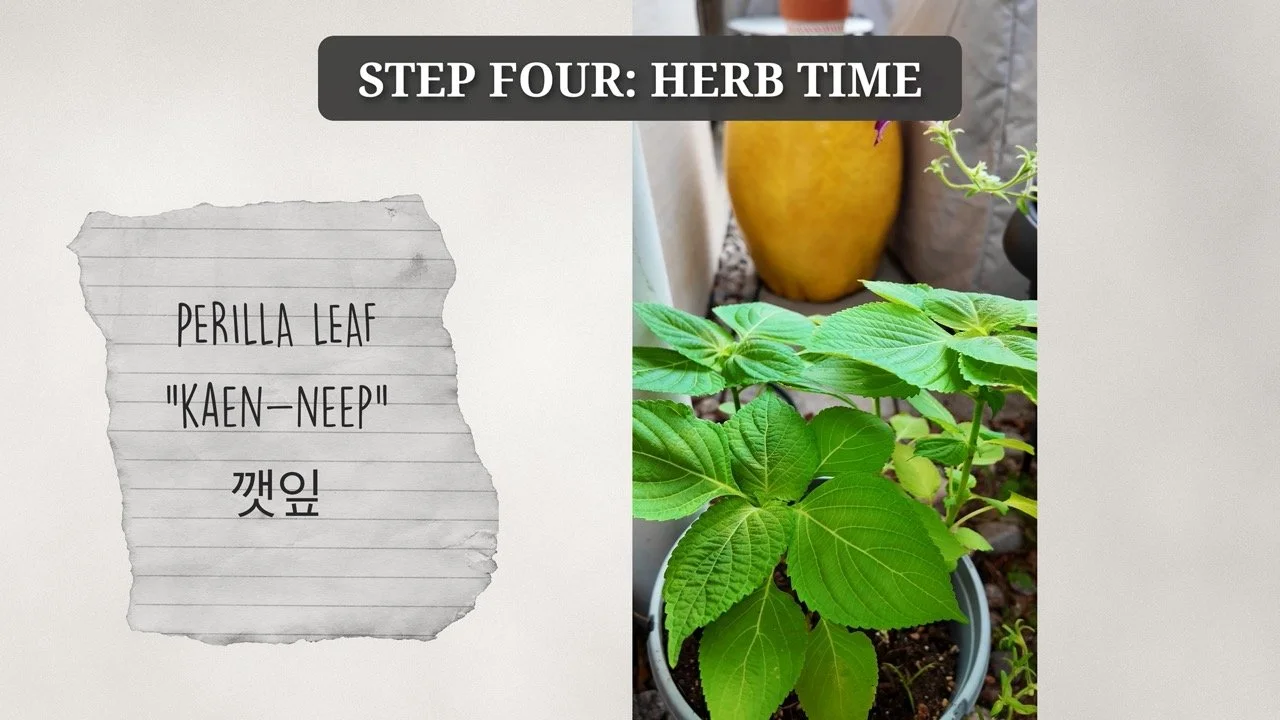
Notes on PERILLA LEAF "kaen-neep" 깻잎
Traditionally, dried and fresh perilla leaf is added to this dish, but since it is hard to get ahold of, it is optional.
STEP FIVE:
ADD POTATOES & BOIL
INGREDIENTS (for part 2)
Main Ingredients
4-6 medium white or russet potatoes (peeled, cut into quarters)
1-2 tbsp gochujang (add more or less depending on your spice level)
1-2 tsp more of ground black pepper/white pepper
2 tbsp ground/powered perilla seed/leaf
Green onions (chopped for garnish)
Optional (But Recommend for the Legit Korean Taste)
5-8 fresh perilla leaves (sliced)
¼ - 1/2 cup of chopped kimchi
I am calling it “optional” only because I know it is hard to find kimchi and fresh perilla leaf worldwide, but in Korea these ingredients are a must for this dish!
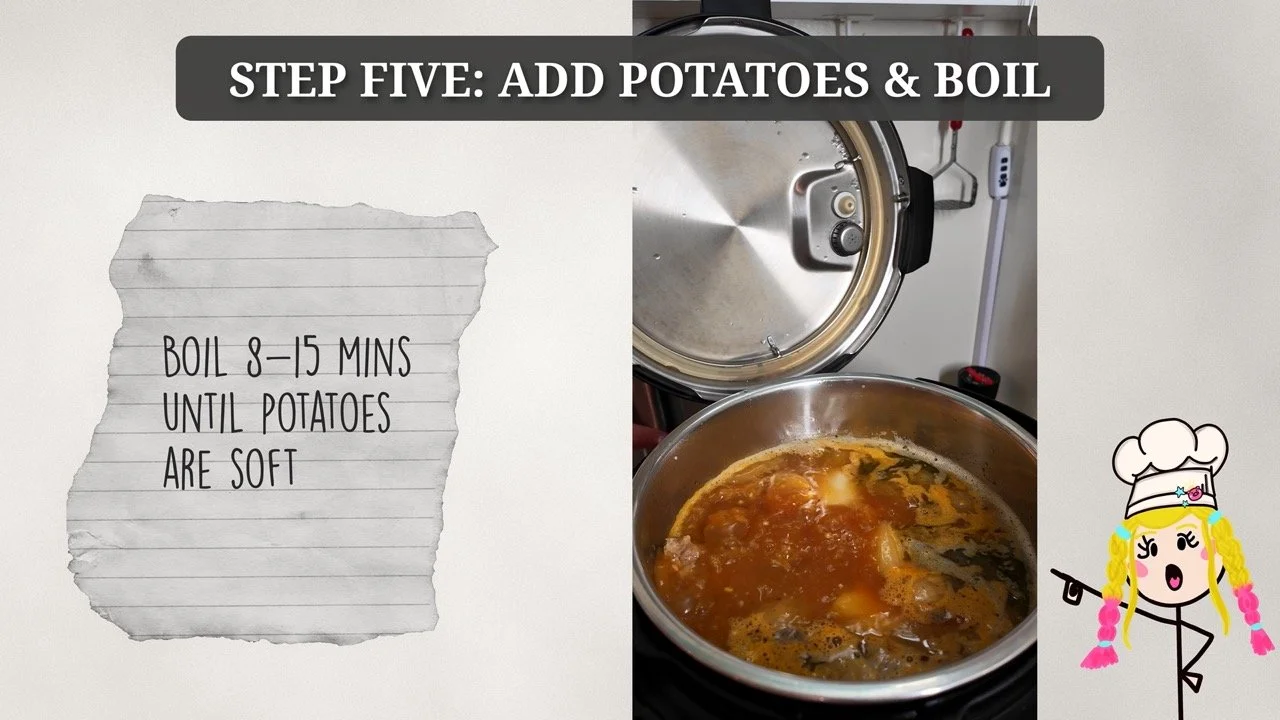
After the 22 minutes is up, allow 15 minutes of Natural Release, then release any remaining steam pressure before removing the lid.
Change the Instant Pot mode back to “Sauté on high” and bring the stew to a boil so we can now cook the potatoes.
TIP: remove a few bones if the pot is too full!
Once the stew is boiling, add the potatoes, the gochujang, black pepper, and perilla leaf powder.
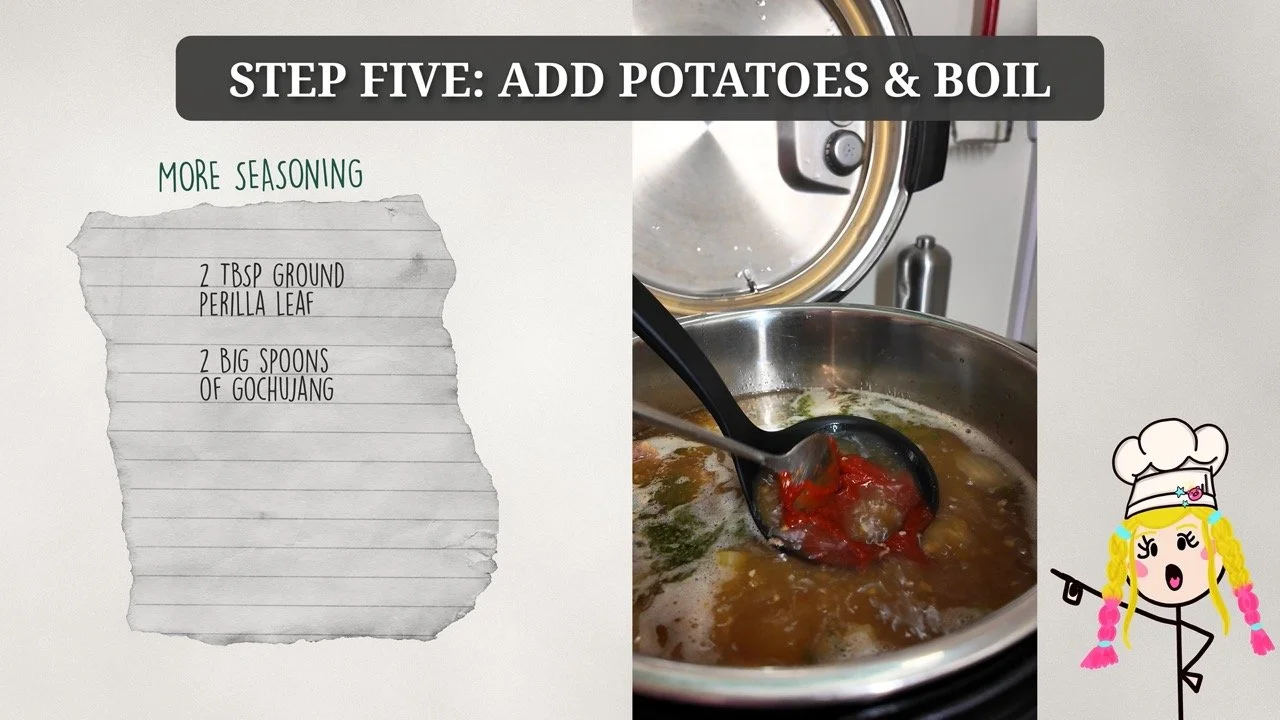
For the gochujang, add it to a ladle and dip it into the hot stew. Using a spoon, mix it inside the ladle breaking up the sticky paste using the hot liquid.
This will help soften it and turn it into liquid. If you drop in a clump of gochujang it can stick to the bottom.
Let it all boil about 8 - 15 mins until potatoes are soft.
Give the stew a taste, and add more seasoning to match your preferences.
STEP SIX:
FINAL FLAVOURS
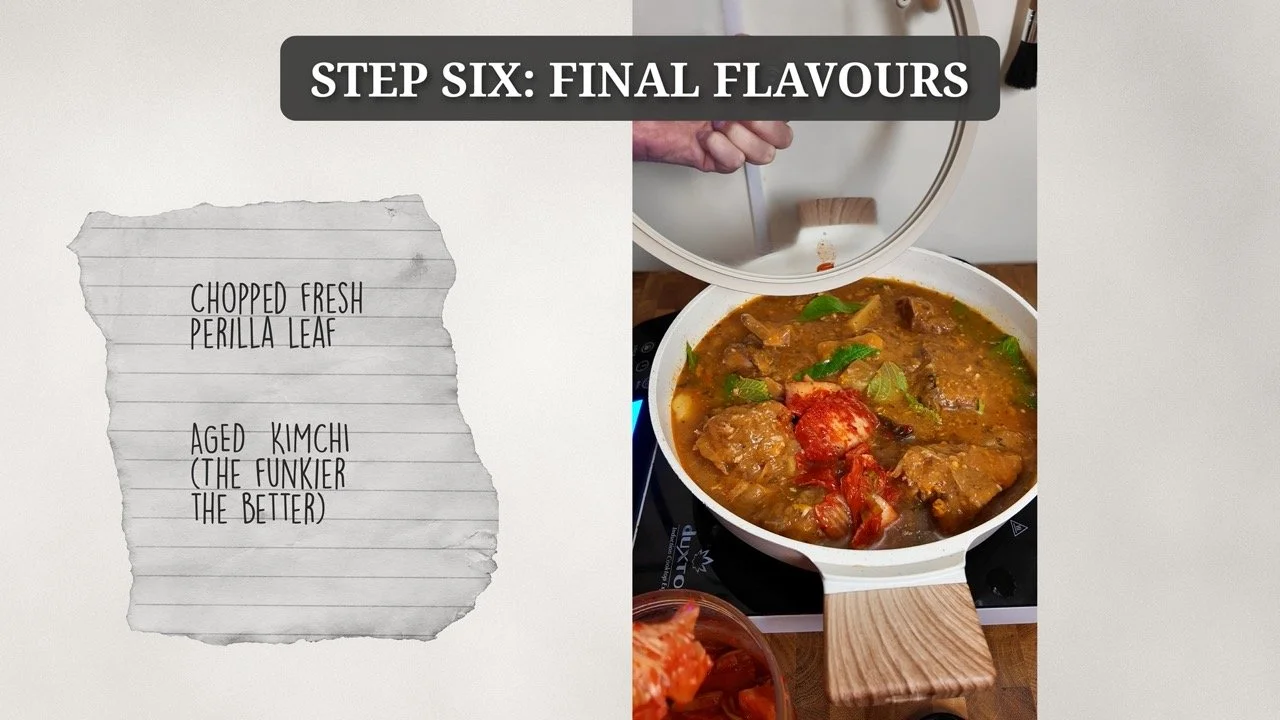
Once the potatoes are all cooked, kill the heat. Add in the chopped kimchi, fresh sliced perilla leaves, and chopped green onions.
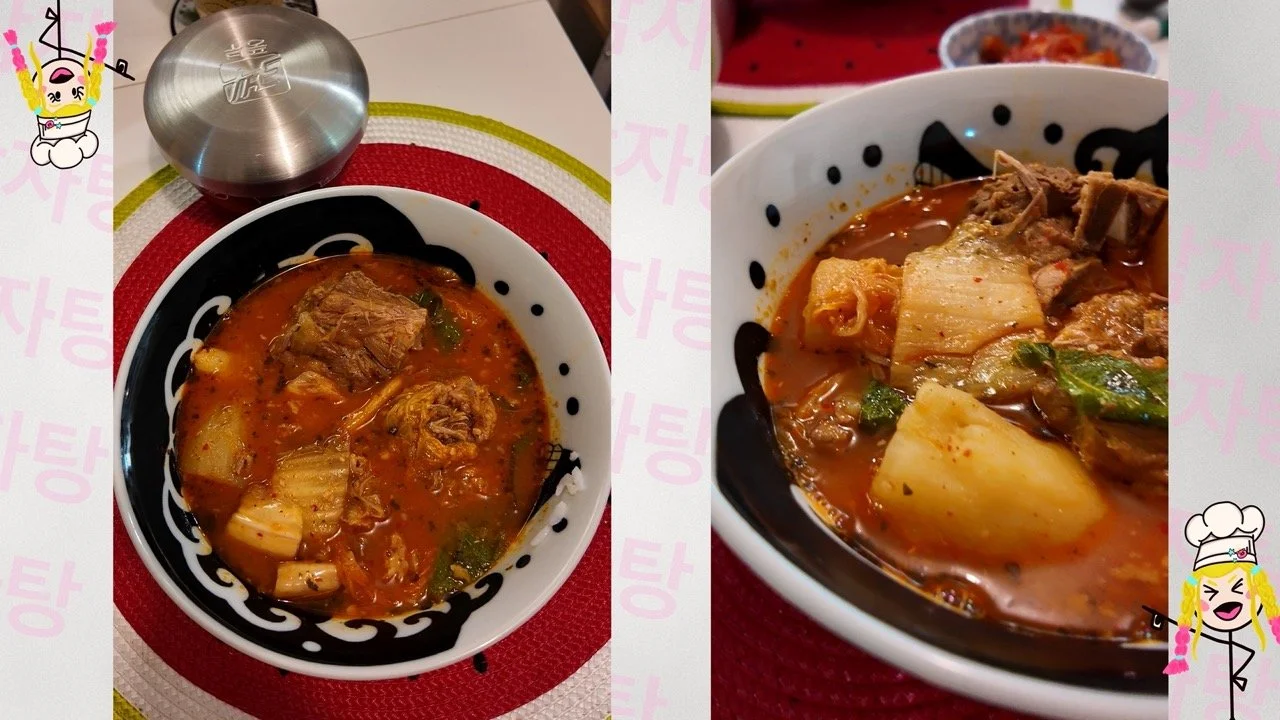
Give it a stir, and serve in a big bowl with fresh white rice on the side.
The bones are covered in tasty soft meat, so it is a little effort to scrap them all off, but the taste is worth it. Chopsticks make great poking devices for getting in the crevices of the bones. Be aware, there can be little bone shards, so don’t eat wildly!